Monthly MULL: Fri September 25 at McGill

The first Montréal Underdocumented Languages Linguistics Lab (MULL-Lab) meeting of the semester will be held on Friday, September 25th, from 4–5PM in Room 404 of Thomson House (3650 Rue McTavish) on the McGill campus.

After the meeting, we’ll have a social hour at Brass Door Pub (2171 Rue Crescent). If you plan to join us for the social hour, please email the organizers.

There will be three presentations:

  • Complement clauses in Tlingit – David Avellan-Hultman (McGill)
  • Nasality in Ese Ejja – Alessio Tosolini (McGill)
  • A raising applicative in Hmong – William Johnston (UQAM)

Syntax Semantics Group 21/09: Emma Custer “Long-distance allomorphy in Pulaar is locally conditioned.”

The Syntax-Semantics Group will hold its next meeting on Monday, September21st, at 1-2pm in Room 002 of the McGill linguistics department, 1085 Dr. Penfield. Online participants can join with this zoom link. 

Emma Custer (McGill) will be presenting “Long-distance allomorphy in Pulaar is locally conditioned.” Here is the abstract:

A question actively debated within the Distributed Morphology framework (Halle & Marantz 1993) concerns the morphosyntactic environment which may condition a morpheme’s phonological form. Although many agree that determination of form is subject to locality constraints, there is disagreement about the nature of these constraints. Under the Node Adjacency Hypothesis (NAH), only a node that is linearly adjacent to a given morpheme may condition that morpheme’s form (Embick 2010; Arregi & Nevins 2012). Under the Span Adjacency Hypothesis (SAH), a structurally adjacent span, or sequence of heads in the same extended projection, may do so (Merchant 2015). In this talk, I discuss data from Pulaar which are problematic for the NAH. In Pulaar, verbal suffixes display allomorphy despite not being surface-adjacent to the node(s) conditioning the allomorphy. I argue that this “long-distance” allomorphy is illusory; at Vocabulary Insertion, allomorph choice is determined locally, conditioned by features of nodes in a structurally adjacent span. Suffixes are then linearized in a Mirror Principle-violating order, producing the effect that structurally adjacent nodes are not necessarily linearly adjacent. The analysis reaffirms locality as a constraint on the environment that may condition allomorphy and provides support for the SAH over the NAH.

Syntax Semantics Group 14/09: Austin Kraft “Partitives in Javanese.”

The Syntax-Semantics Group will hold its next meeting on Monday, September14th, at 1-2pm in Room 002 of the McGill linguistics department, 1085 Dr. Penfield. Online participants can join with this zoom link. 

Austin Kraft (McGill) will be presenting “Partitives in Javanese.” Here is the abstract:

I present a new account for why partitives in Javanese (Austronesian) yield a different interpretation than partitive counterparts in languages like English. Constructions such as the English three of Mary’s tables exhibit “proper partitivity” (Barker 1998): Three of Mary’s tables are empty yields an inference that Mary has more than three tables in total. Meanwhile, Javanese partitives do not exhibit proper partitivity, raising the question of why proper partitivity appears in English but not Javanese. Building to an explanation, I first motivate the explicit syntax and semantics of Javanese partitives, appealing to “improper partitivity.” In delimiting the ways that numeral quantification and possession can co-occur in Javanese nominals, I hypothesize that (i) improper partitivity is the basic semantic relation of partitives in English and Javanese alike, and (ii) proper partitivity arises through pragmatic strengthening. For a pragmatic theory, proper partitivity appears when conditions for pragmatic strengthening are met (Ionin et al. 2006, Marty 2019), and it predicts a lack of proper partitivity when such conditions are not met. I argue that Javanese partitives fulfill this prediction.

Summer Fieldwork in Northern Senegal

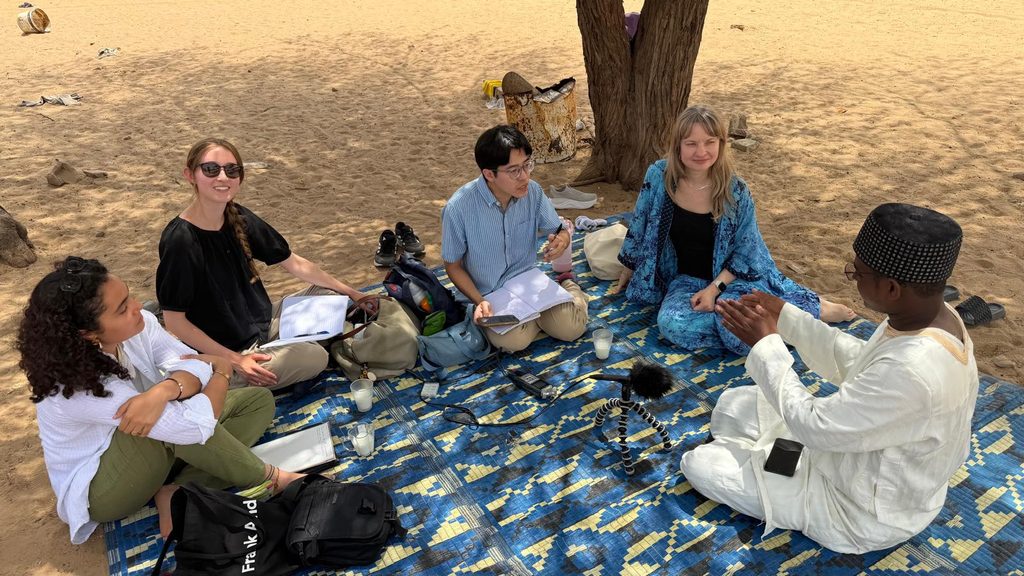
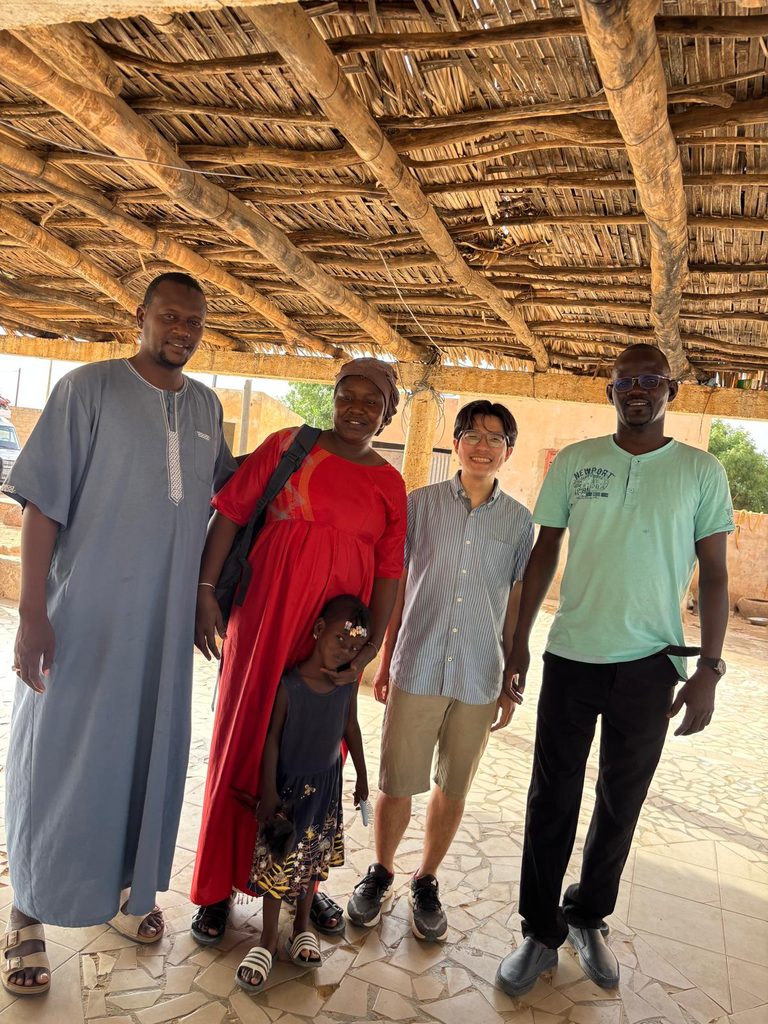
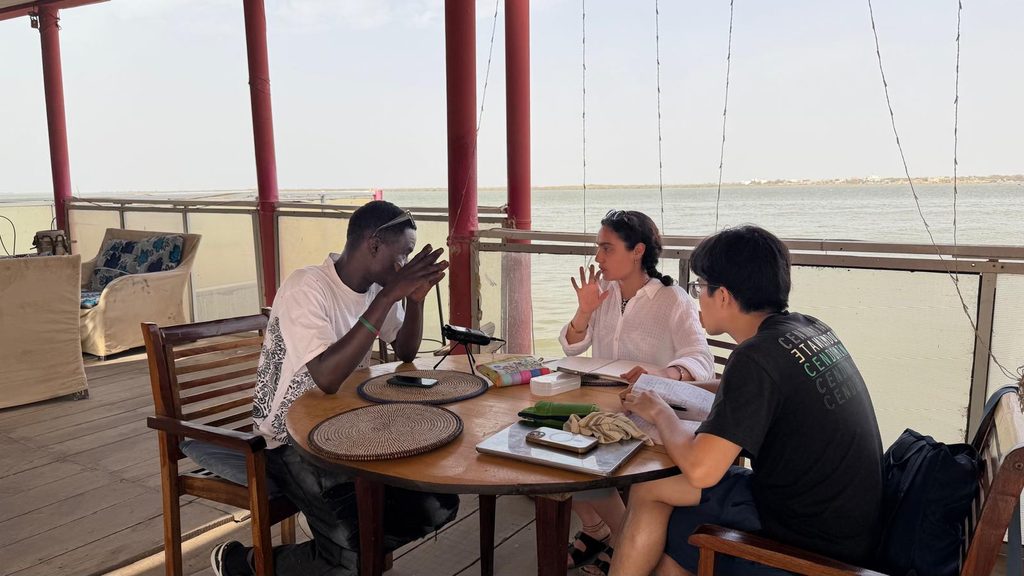
Martina Martinović accompanied by Emma Custer (M2), Kento Tanaka (PhD2), and Sama’a Salama (PhD3) spent 6 weeks in the Saint-Louis region of Senegal conducting fieldwork on Wolof and Pulaar.

Summer Fieldwork in Teslin, Yukon Territory

Professor James Crippen, PhD students Laurestine Bradford and David Avellan-Hultman, and UBC PhD student Aaní Perkins traveled to Teslin, YT for three weeks in August to do fieldwork on Tlingit (Lingít [ɬìn’kít]). They had elicitation sessions almost every day, covering subordinate clauses, question and focus particles, and progressive aspect with elders Anaalahaash Sam Johnston, Shuwuteen Margaret Bob, Kudagaan Madeleine Jackson, and Keiyishí Bessie Cooley. They were also joined by several language workers from the community.

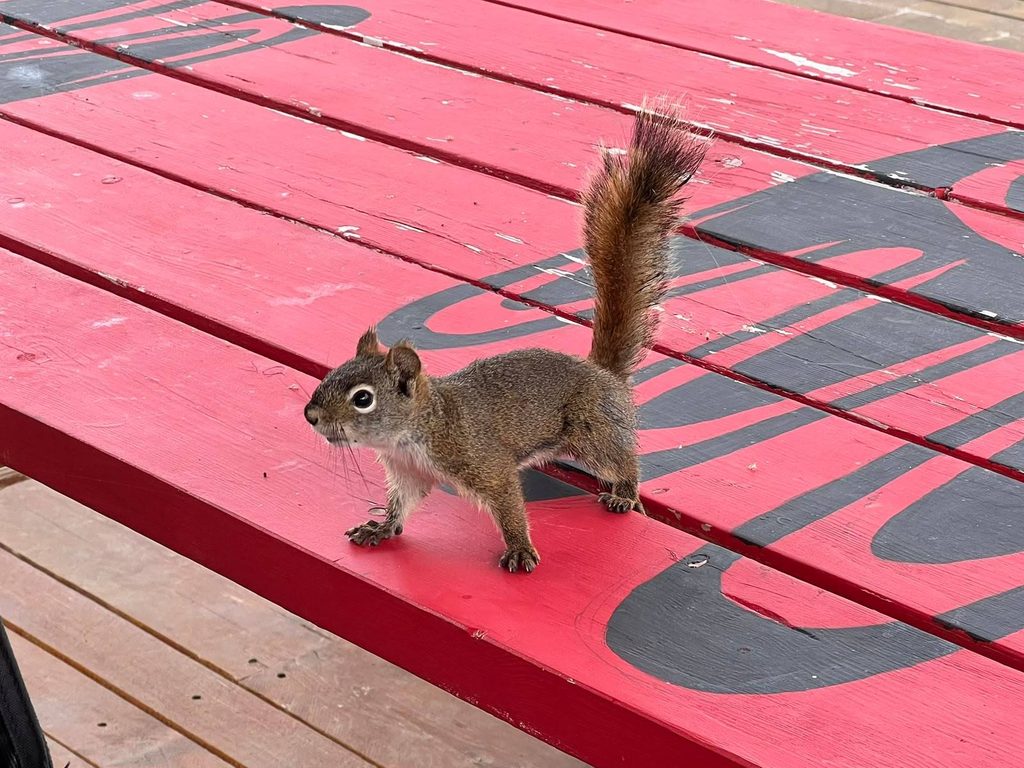
Below pictured is the red squirrel that wanted nothing more than to get into the Teslin Tlingit Heritage Centre and steal their snacks.

Fall 2026 MULL meetings

The Montréal Underdocumented Languages Linguistics Lab (MULL-Lab) is happy to announce meetings for this term​. MULL-Lab is a group of linguists at universities in Montréal who work on underdocumented languages. We convene once a month, and meetings are open to anyone interested.

The scheduled dates and locations for this semester’s meetings are:

  • Fri, Sept 25 at McGill
  • Fri, Oct 16 at UdeM
  • Fri, Nov 13 at TBA
  • Fri, Dec 4 at TBA

Meetings are at 4–5pm, followed by a social hour. Each meeting features three 20-minute, data-oriented presentations related to underdocumented languages. Presenters may divide the time between presentation and questions as they prefer.
The presentations are not expected to be theory-heavy, and project in progress or incomplete work is very welcome.

If you would like to present, please contact one of this year’s MULL organizers:
McGill: ziru.chen@mail.mcgill.ca
UdeM: julien.labonte@umontreal.ca

Please note that future MULL announcements will be sent to the MULL mailing list. If you would like to join or be removed from the list, contact Ziru Chen.

Summer fieldwork

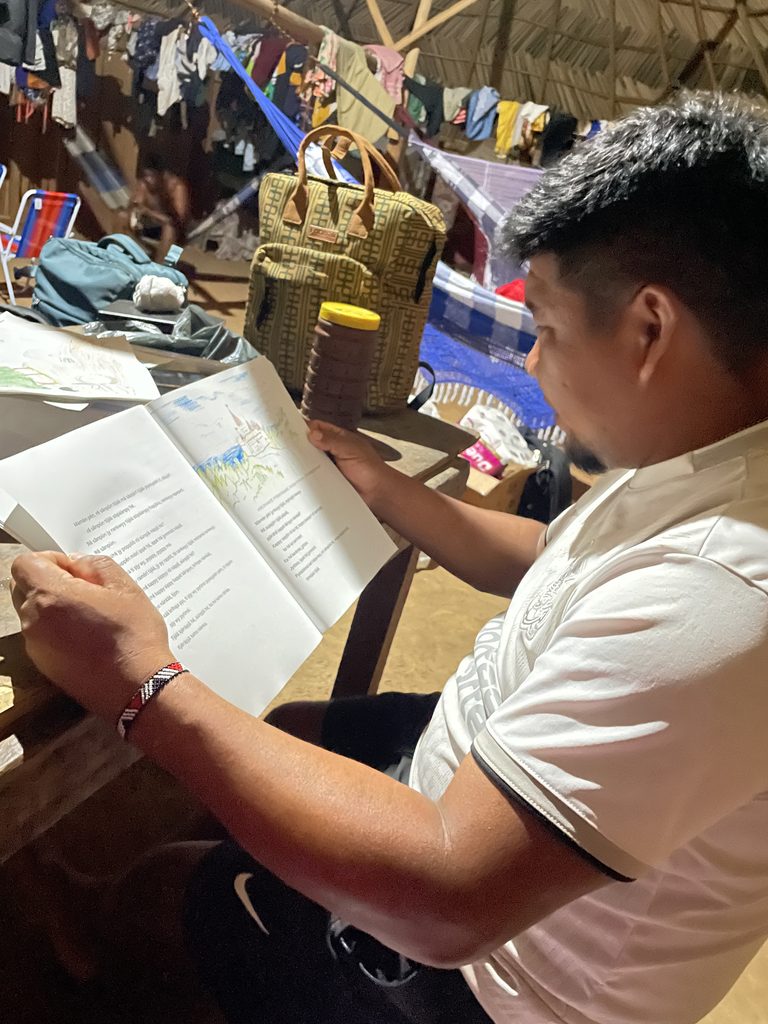
Myriam Lapierre and UW graduate students Sunny Ananthanarayan and Jessa Jeter spent four weeks conducting fieldwork with the Panãra community in Brazil this summer. Working with their friend and collaborator Tepakriti, they recorded numerous traditional narratives told by Panãra elders, transcribed several of these stories, recorded daylong recordings of infant language environments, conducted elicitation sessions, and collected data for a phonetics experiment on contrastive focus. They also delivered four illustrated books in Panãra to each of the schools in the various Panãra villages and conducted a three-day literacy workshop—the first ever held in the village of Sõnkârasãn. And last but not least, they watched the FIFA World Cup final!