McGill at Sinn und Bedeutung
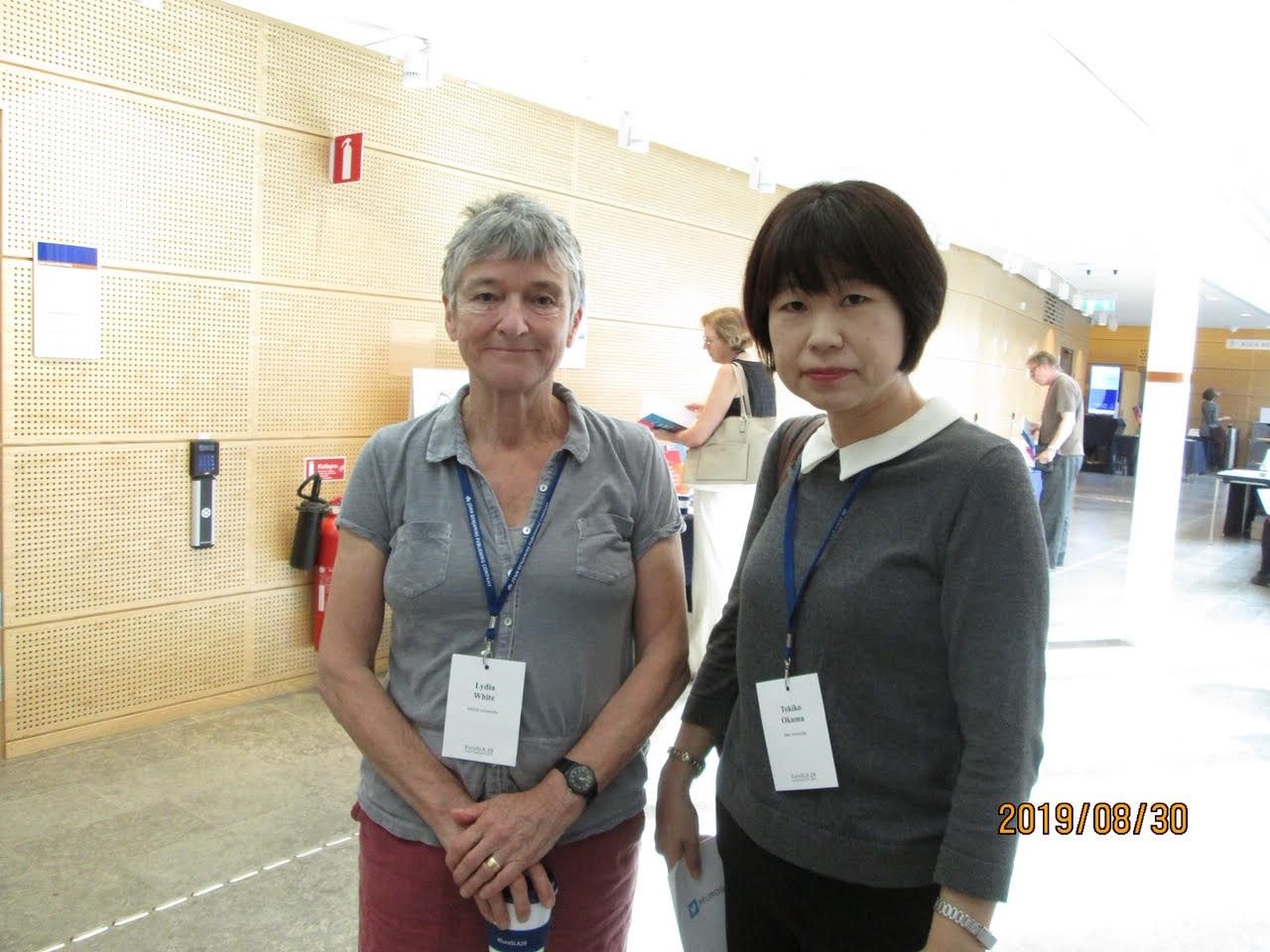
McGill linguists of past and present attended Sinn und Bedeutung 24 at the Universität Osnabruk this past week. There were two talks by current department members:
- Luis Alonso-Ovalle and Justin Royer. Random-Choice Modality: The View from Chuj (Mayan)
- Francesco Paolo Gentile and Bernhard Schwarz. An argument that higher order wh- quantification is over existentials only
And the McGill group gathered for a photo break:

New McLing student editor, Will Johnston
Will Johnston will be joining the McLing team as the new graduate student editor, replacing outgoing editor Francesco Gentile. Will joins faculty editors Jessica and Tim. Welcome aboard Will, and thanks for all your work Francesco!
Summer news round-up, part II
Here is part II of what McGill linguists did this summer!
- A paper on the syntax and semantics of numeral classifiers in Ch’ol appeared in Glossa this summer, co-authored by Alan Bale (PhD ’06), Jessica Coon, and Nicolás Arcos López. It’s titled: “Classifiers, partitions, and measurements: Exploring the syntax and semantics of sortal classifiers.”
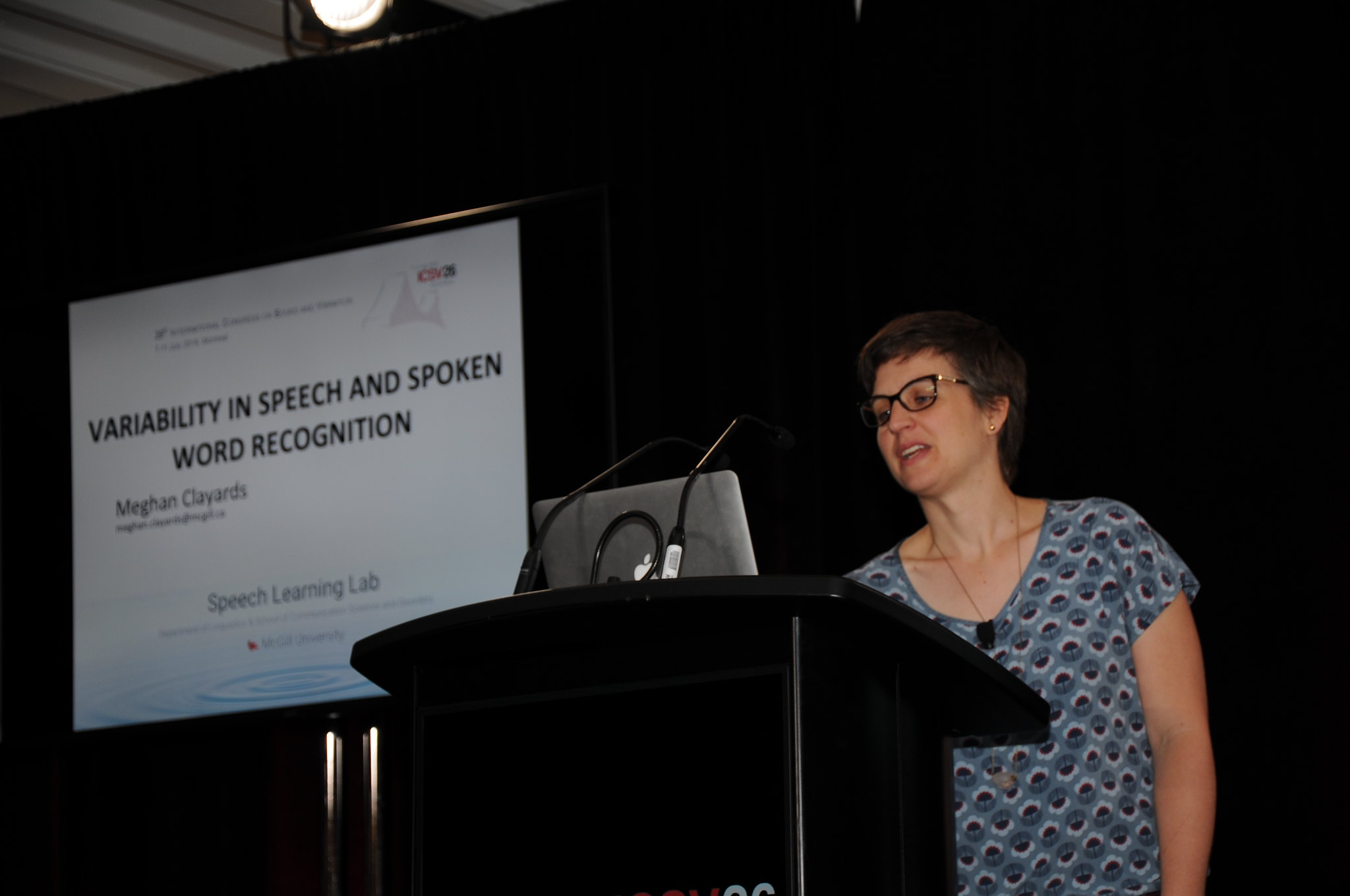
- Meghan Clayards gave a plenary lecture at the 26th International Conference on Sound and Vibration held in Montreal July 7-11 titled “Variability in speech and spoken word recognition”. Her collaborative work with a group at UCL was also published this summer:
Dong, H., Clayards, M., Brown, H., Wonnacott, E. (2019) The effects of high versus low talker variability and individual aptitude on phonetic training of Mandarin lexical tones. PeerJ, 7, e7191.

-
Incoming student Alex Cucinelli attended the annual meeting of the CLA at UBC, and the International Child Phonology Conference at UdeM, presenting posters with Parisa Tarahomi.
- Thea Knowles (BHons 2011, Postbac 2012-13) has accepted an Assistant Professor position at the University at Buffalo in the Department of Communicative Disorders and Sciences. Congratulations, Thea!”
- Junko Shimoyama presented her joint work with Dan Goodhue (PhD 2018) on embedding under quotative ’to’ in Japanese at the RelNomComp workshop at the University of Toronto (June 19-20, 2019). The workshop was associated with her SSHRC grant on non-canonical clausal subordination with co-PI Keir Moulton (UofT, McGill postdoc 2009-11).

past and present Montrealers pictured: Liz Smeets, Richard Compton (UQAM), Alan Munn (BA 1987), Matthew Schuurman (UQAM)
Welcome new faculty member Martina Martinović
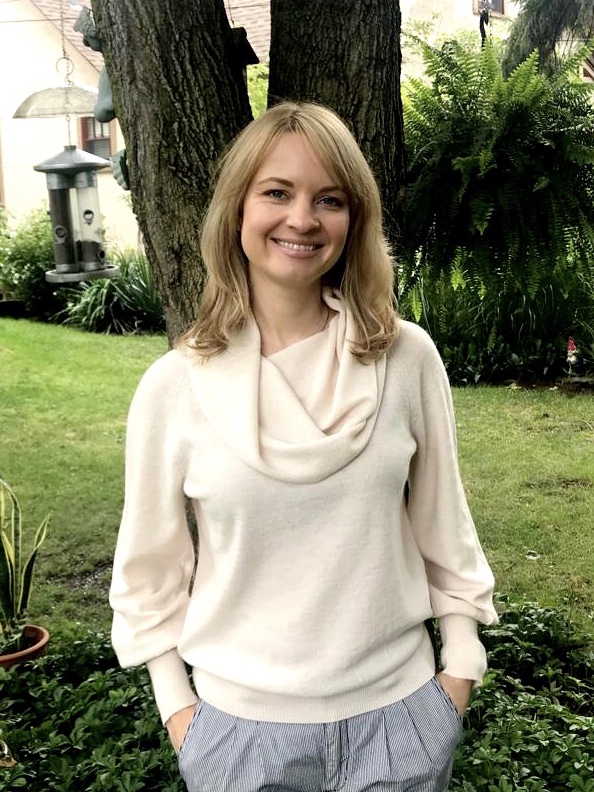
McLing is very happy to welcome Martina Martinović to the McGill Linguistics Department! Martina will be around this fall as a postdoctoral researcher, and then officially joins the faculty in January.
Martina is a fieldworker, primarily interested in cross-linguistic variation in morphosyntax. So far she has mostly worked on Niger-Congo languages, especially Wolof. She does most of her fieldwork in the northern part of Senegal, in the town of Ndar (St-Louis) and the village of Ndombo. Some topics she has worked on include cartographic and non-cartographic effects, wh-movement and agreement, extraction asymmetries, copular clauses, the syntax and semantics of information structure. She is especially interested in how syntactic and morphological (post-syntactic) operations are ordered and how they interact with each other. When she is not working, you will probably find her knitting.
Welcome Martina!
Welcome new graduate students!
McLing is pleased to welcome the new incoming group of MA and PhD students!
Alex Cucinelli is finishing his M.A. thesis in Linguistics at Memorial University of Newfoundland, where he studied phonological acquisition, focusing on the role phonotactics and distributional evidence play in development. He is also interested in corpus building and curation. In his spare time, Alex enjoys hiking, and exploring the world around him. He also enjoys playing and listening to music of (almost) any genre.
Emily Goodwin is interested in computational linguistics, semantic parsing, compositionality, and learnability theory. She has completed work on systematicity in neural network generalization, and did her B.A. in linguistics at McGill.
Shao-ren Lyu’s main interests lie in phonetics, sociolinguistics, and sound change in tonal languages, especially in Hakka, and Southern Min. Shao-ren received his B.A. in foreign languages and literatures and M.A. in linguistics at National Chiao Tung University, Taiwan. Outside of linguistics, he is fascinated by Hong Kong movies, Cantonese pop music, and gourmet food in Hong Kong. He is learning Cantonese, which is known for the complicated lexical tones.
Tarynne Pachano is a member of the Cree Nation of Chisasibi, Quebec. She spent the first five years of her life within her community before moving down south. Her first language was East Cree and she later learned English and French in elementary school in Ottawa, Ontario. Her academic interests lie in the revitalization of Indigenous languages including her own. Along with being a student, Tarynne is also a wife and a mother to a very independent, strong-willed 21-month old little girl named Sophie.
Jonathan Palucci is interested in semantics, syntax (and the syntax-semantics interface), pragmatics and modelling natural language using mathematical structures and tools. He completed his B.A & Sc in Cognitive Science, minoring in Linguistics, at McGill University.
Connie Ting completed her B.A. and M.A. in Linguistics at the University of Toronto. Her main interests lie in phonetic variation, psycholinguistics, and language acquisition.
Beini Wang is from Ningbo, China. She is currently interested in phonetics, phonology and prosody. Her research has focused primarily on Mandarin. She completed her B.A. in linguistics, minoring in psychology and French, at McGill University. In her spare time, she enjoys playing the violin, which she started to learn only four years ago.
Wei Zhang is interested in exploring the nature of speech prosody, phonetic variation, and speech perception, as well as the application of the technologies for analyzing and modeling speech signals. She obtained her M.E. degree from the Beijing Language and Culture University.

Welcome Otis!
McLing is very pleased to report the arrival of Otis Smeets-Bakkar, born August 24th to McGill PhD student Liz Smeets. You might have the chance to meet Otis this fall, when Liz comes back to Montreal to defend her recently-filed dissertation! Double congratulations Liz!

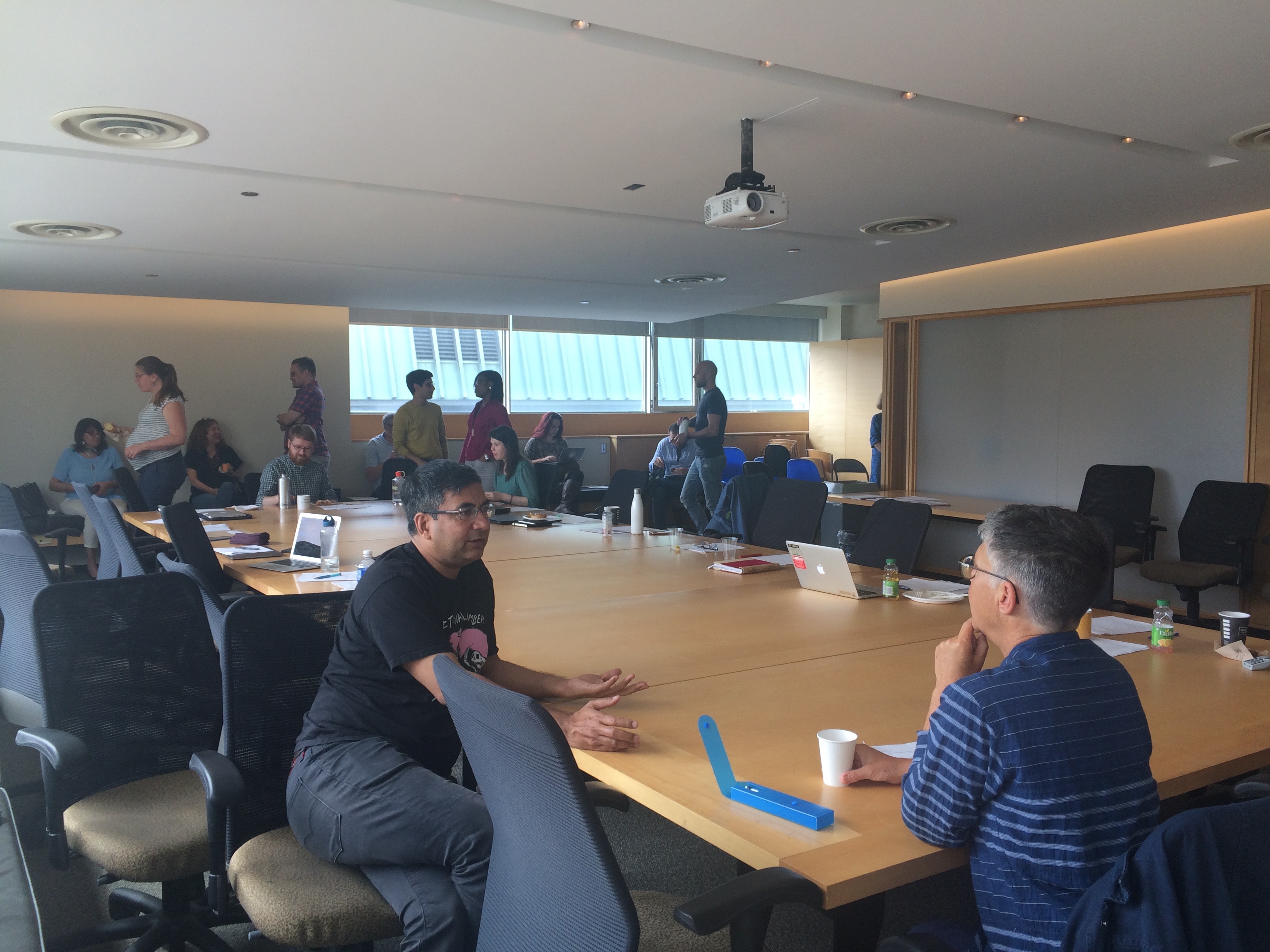
Michael Wagner to Maryland
The application of allophonic processes across word boundaries (so-called ‘sandhi’-processes, such as flapping (cf. De Jong, 1998; Patterson and Connine, 2001) and sibilant assimilation (cf. Holst and Nolan, 1995) in English, or liaison in French (Durand and Lyche, 2008)) is known to be subject to locality conditions. The same processes are also known to be variable. While these two properties have often been observed as characteristic of sandhi (e.g. Kaisse, 1985), existing theories of either aspect do not explain the link between the two. This talk reports on a project that pursues the hypothesis that the locality and variability of cross-word allophonic processes are tightly linked, and can both be understood as a consequence of the locality of production planning.The basic idea is that flapping, sibilant assimilation, liaison and related processes are sensitive to the phonological properties of a following word, but these can only exert their effect if they are already available when the phonetic detail of the current word is being planned. Under this view, effects of syntax and prosody on sandhi are due to their indirect effects on production planning. For example, a speaker is less likely to plan ahead across a sentence boundary. This hypothesis predicts that all factors affecting planning should affect the likelihood of cross-word allophonic processes (such as the predictability of the following word, the # syllables of the following word, etc.). The account makes novel predictions about what types of phonological processes, including certain kinds of phonologically-conditioned allomorphy, will necessarily have to be local and variable. It also makes different predictions than accounts of sandhi in terms of gestural overlap (Browman & Goldstein 1992), or accounts that try to rationalize sandhi phenomena directly based on predictability (Hall, Hume, Jaeger, & Wedel 2018).
Welcome back!
McLing hopes everyone had a great summer! As always, we invite you to your news (presentations, publications, grants, fieldwork, courses, workshops, departmental events, student projects, jobs, etc.) for upcoming weekly newsletters. News can be sent to mcling.linguistics@mcgill.ca.